Culture and stewardship


Profile
The bigger picture


Profile
The bigger picture
It's been a busy 12 months for Eiman Aldarmaki, Head of Operation and Maintenance Programs at Al Ain City Municipality in the United Arab Emirates. Not only has she led her team to achieve ISO 55001:2024, but she has also supported other departments to this achievement and helped them to embed asset management principles. In addition, she has become chair of a new committee to empower women in the workplace and been a key player in establishing the new IAM UAE Chapter. She is not just someone who spins a lot of plates; she helps others spin their plates, too.
We're chatting in early February, a month or so before the second IAM UAE Chapter conference. Aldarmaki is really looking forward to another packed event (read about last year's inaugural conference) and, particularly, to the awards.
'I was very excited when the UAE got its own IAM Chapter,' she says. 'One of my proudest achievements is establishing the IAM UAE Chapter Excellence Awards. I was delighted that Al Ain City Municipality was one of the finalists for the IAM Team Achievement Award last year. But it's not just about us – I am thinking big picture. Having these awards allows the UAE to take part in the IAM Global Awards, which raises the bar for asset management standards. I want to increase awareness of asset management in the UAE and to share our experiences globally. The UAE had 28 award entries in the first year, so that was very positive.'
Point to prove
Aldarmaki's introduction to asset management came when she had been working for two years. After graduating as a civil engineer in 2010, she got a job as a roads maintenance engineer. She says she enjoyed the assessment and evaluation aspects, but there was no mention of asset management as a discipline.
'We started building a database using the geographic information systems that we had on hand. In 2012, a consultant came to help us with a data-collection project using automated techniques. I can honestly say my asset management story started there,' she says. 'It was transformative, because suddenly it was about asset management principles. I love it because it is strategic, sustainable and brings together all the components. I attended the 2012 IAM Conference in London and became a member of the IAM in 2020.'
Becoming an engineer was not something Aldarmaki always wanted to do. In fact, it came about partly because of her father's influence – he encouraged his children to pursue a scientific academic path, rather than a literary one – and partly because of her own determination.
'When I was looking into civil engineering courses in the early 2000s, it was still a very male-dominated sector. I saw that as a challenge – I can be very strong-minded! I thought to myself: "I will apply to do civil engineering, and I will be successful."'
And she did: she got onto the course and absolutely loved it. 'I feel civil engineering really fits my personality because I am a very practical person; I am very systematic. I like the language of numbers, so it suits me well.'
"One of my proudest achievements is establishing the IAM UAE Chapter Excellence Awards"
On the right track
Aldarmaki started to progress within the infrastructure department, taking on project manager roles, becoming Head of the Asset and Spatial Unit, and then of the Infrastructure Assets Section, responsible for roads and infrastructure. Just last week, she tells me, this role was expanded to included parks, landscaping and buildings assets. This follows her achievement in project managing all of these departments to achieve ISO 55001:2024 in November 2025.
'Setting up the IAM UAE Chapter Awards is one of my proudest achievements. The other is achieving ISO 55001,' she says. 'In 2022, we achieved ISO 55001:2014, but that was only for infrastructure. In 2025, we got ISO 55001:2024 for infrastructure, parks and buildings – for all the assets. I was the project manager who saw that through, along with my team.
'The other departments had a good foundation, but were not so advanced in their asset management journey. We introduced them to an ISO-aligned asset management framework and helped to embed it in their ways of working. I am really proud that we found a collaborative way to support them to increase their asset management maturity.'
Exciting times
Aldarmaki has recently been asked to chair the Women Empowerment Committee at the Department of Municipalities and Transport, which oversees Al Ain Municipality, Abu Dhabi Municipality, Al Dhafra Municipality, and the Integrated Transport Centre. The committee focuses on supporting, celebrating and enhancing the contributions of women in leadership roles through additional initiatives.
'We've already established an excellence award to celebrate women’s achievements – you have probably gathered by now that I love an award,' she smiles. 'The winner will be announced on UAE Women's Day, which will be the first-year anniversary of our committee. It’s a really exciting initiative.'

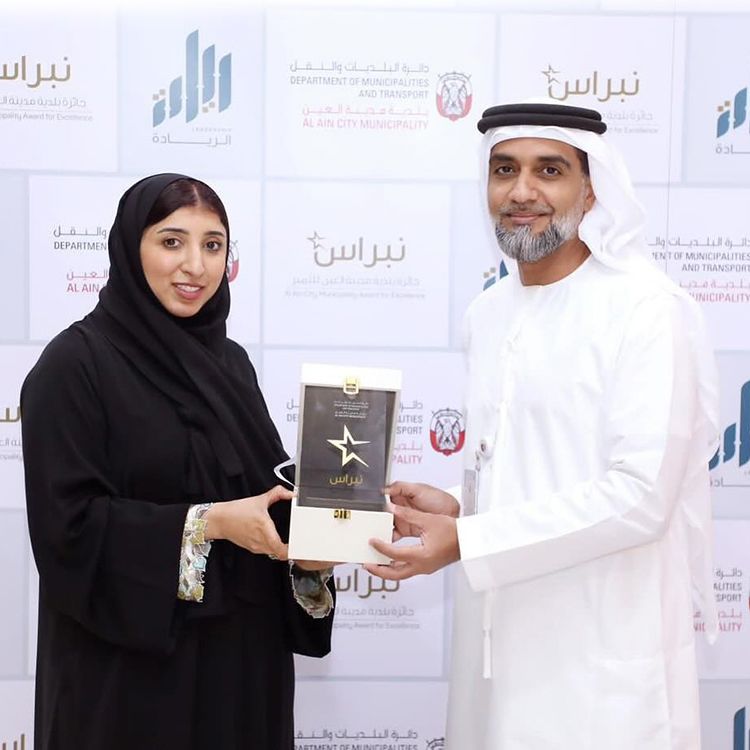
Aldarmaki receiving an internal award in 2023 for best practice in the use of modern technologies in survey operations
Aldarmaki receiving an internal award in 2023 for best practice in the use of modern technologies in survey operations
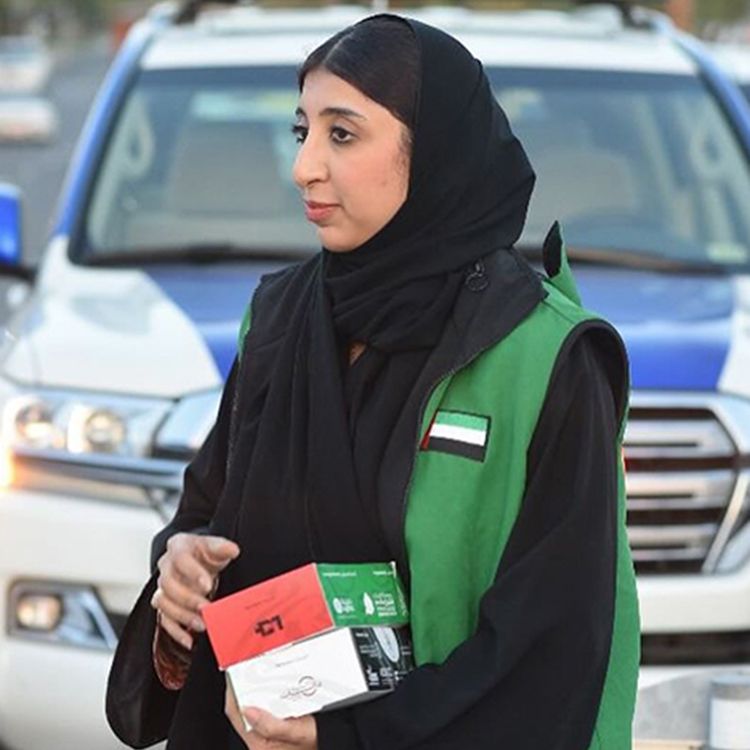
Aldarmaki volunteers during Ramadan to distribute Iftar meals to drivers at city intersections as part of a road-safety community initiative aimed at reducing speeding and preventing accidents
Aldarmaki volunteers during Ramadan to distribute Iftar meals to drivers at city intersections as part of a road-safety community initiative aimed at reducing speeding and preventing accidents
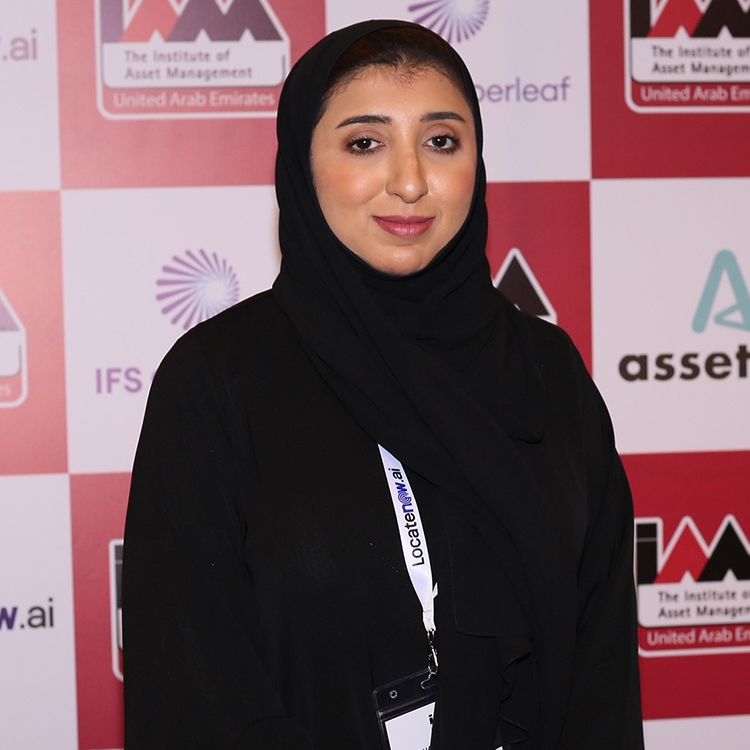
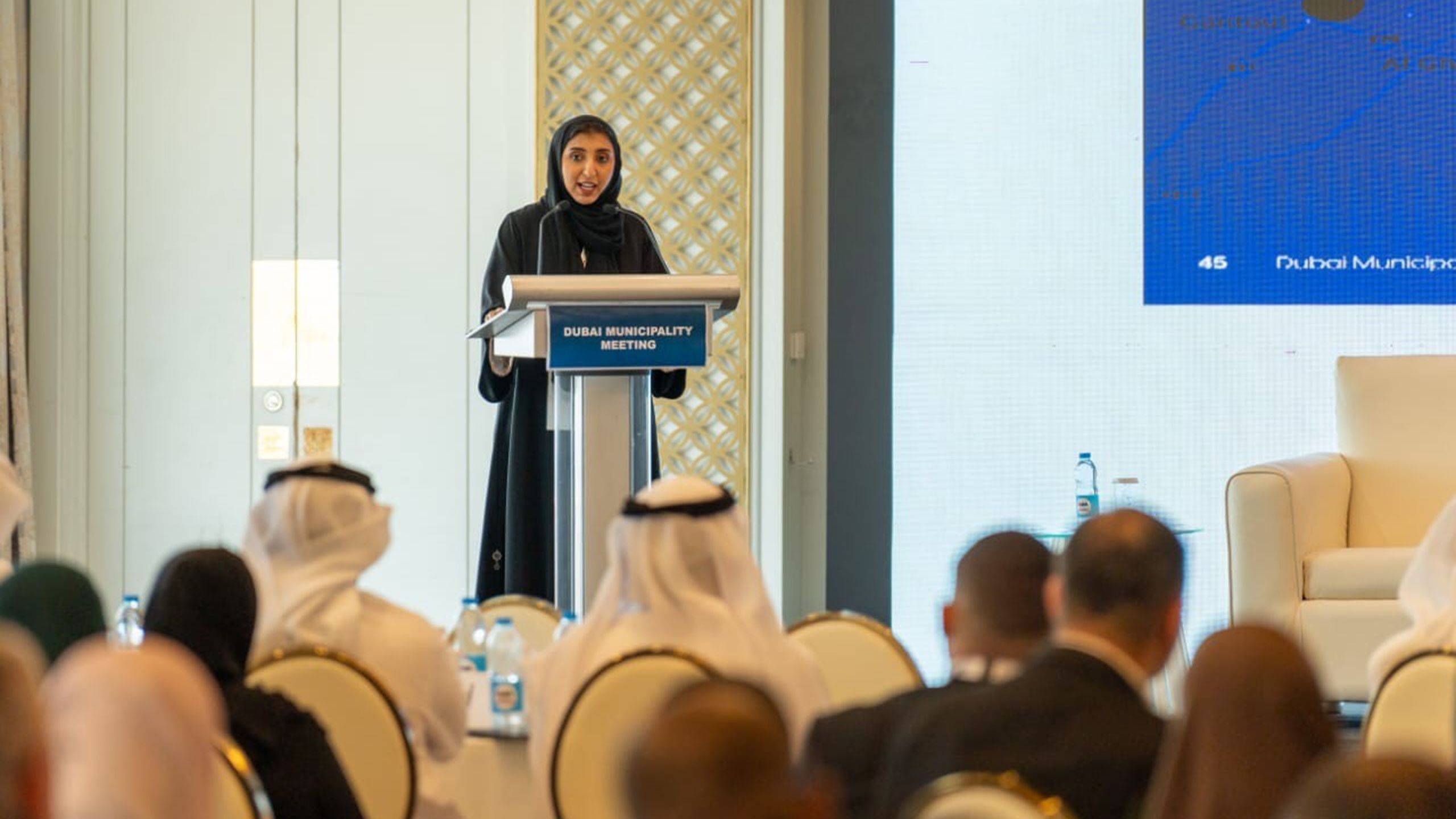
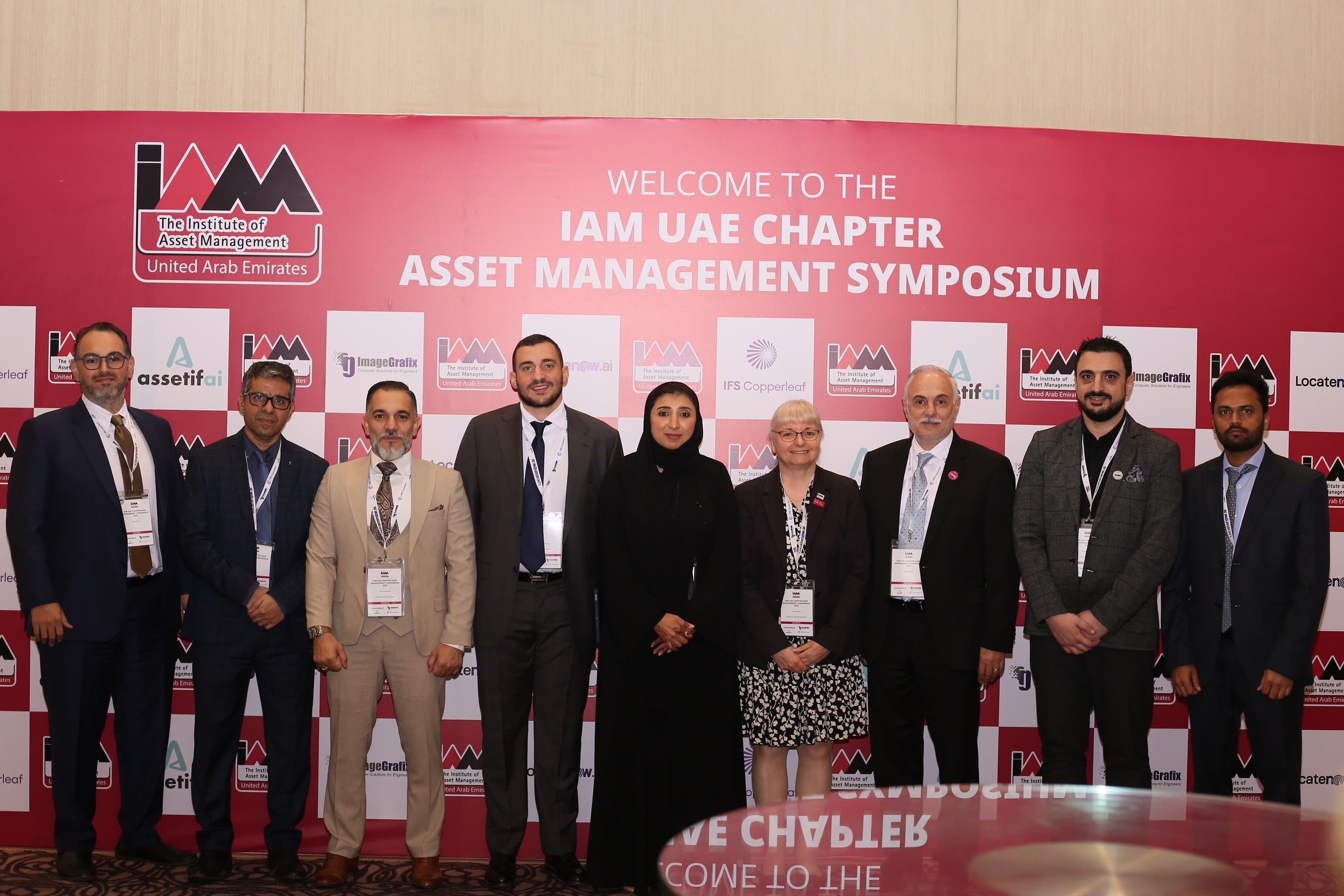
Aldarmaki at the UAE Chapter Conference 2025
Aldarmaki at the UAE Chapter Conference 2025
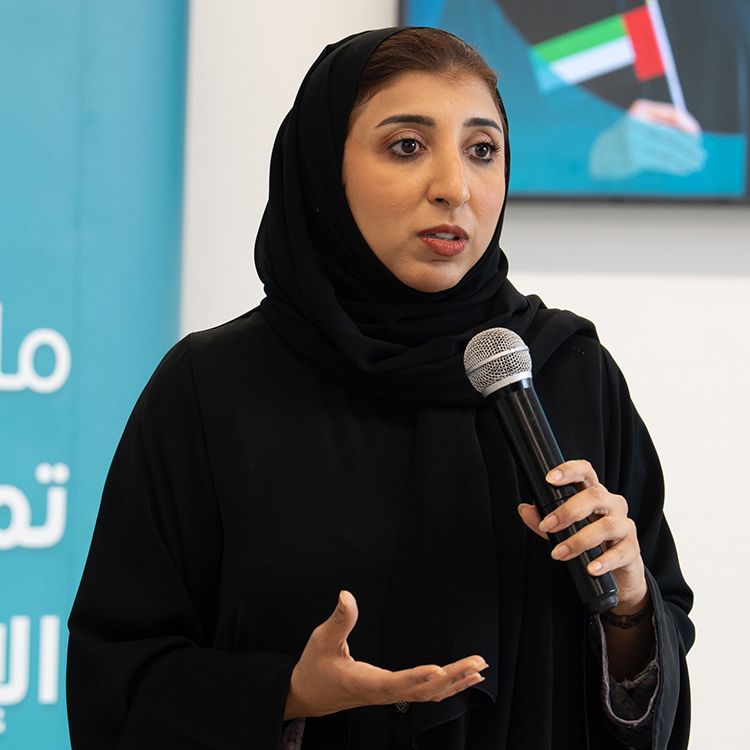
Aldarmaki is the chair of the Women Empowerment Committee at the Department of Municipal Transport
Aldarmaki is the chair of the Women Empowerment Committee at the Department of Municipal Transport
It's been a busy 12 months for Eiman Aldarmaki, Head of Operation and Maintenance Programs at Al Ain City Municipality in the United Arab Emirates. Not only has she led her team to achieve ISO 55001:2024, but she has also supported other departments to this achievement and helped them to embed asset management principles. In addition, she has become chair of a new committee to empower women in the workplace and been a key player in establishing the new IAM UAE Chapter. She is not just someone who spins a lot of plates; she helps others spin their plates, too.
We're chatting in early February, a month or so before the second IAM UAE Chapter conference. Aldarmaki is really looking forward to another packed event (read about last year's inaugural conference) and, particularly, to the awards.
'I was very excited when the UAE got its own IAM Chapter,' she says. 'One of my proudest achievements is establishing the IAM UAE Chapter Excellence Awards. I was delighted that Al Ain City Municipality was one of the finalists for the IAM Team Achievement Award last year. But it's not just about us – I am thinking big picture. Having these awards allows the UAE to take part in the IAM Global Awards, which raises the bar for asset management standards. I want to increase awareness of asset management in the UAE and to share our experiences globally. The UAE had 28 award entries in the first year, so that was very positive.'
Point to prove
Aldarmaki's introduction to asset management came when she had been working for two years. After graduating as a civil engineer in 2010, she got a job as a roads maintenance engineer. She says she enjoyed the assessment and evaluation aspects, but there was no mention of asset management as a discipline.
'We started building a database using the geographic information systems that we had on hand. In 2012, a consultant came to help us with a data-collection project using automated techniques. I can honestly say my asset management story started there,' she says. 'It was transformative, because suddenly it was about asset management principles. I love it because it is strategic, sustainable and brings together all the components. I attended the 2012 IAM Conference in London and became a member of the IAM in 2020.'
Becoming an engineer was not something Aldarmaki always wanted to do. In fact, it came about partly because of her father's influence – he encouraged his children to pursue a scientific academic path, rather than a literary one – and partly because of her own determination.
'When I was looking into civil engineering courses in the early 2000s, it was still a very male-dominated sector. I saw that as a challenge – I can be very strong-minded! I thought to myself: "I will apply to do civil engineering, and I will be successful."'
And she did: she got onto the course and absolutely loved it. 'I feel civil engineering really fits my personality because I am a very practical person; I am very systematic. I like the language of numbers, so it suits me well.'
"One of my proudest achievements is establishing the IAM UAE Chapter Excellence Awards"
On the right track
Aldarmaki started to progress within the infrastructure department, taking on project manager roles, becoming Head of the Asset and Spatial Unit, and then of the Infrastructure Assets Section, responsible for roads and infrastructure. Just last week, she tells me, this role was expanded to included parks, landscaping and buildings assets. This follows her achievement in project managing all of these departments to achieve ISO 55001:2024 in November 2025.
'Setting up the IAM UAE Chapter Awards is one of my proudest achievements. The other is achieving ISO 55001,' she says. 'In 2022, we achieved ISO 55001:2014, but that was only for infrastructure. In 2025, we got ISO 55001:2024 for infrastructure, parks and buildings – for all the assets. I was the project manager who saw that through, along with my team.
'The other departments had a good foundation, but were not so advanced in their asset management journey. We introduced them to an ISO-aligned asset management framework and helped to embed it in their ways of working. I am really proud that we found a collaborative way to support them to increase their asset management maturity.'
Exciting times
Aldarmaki has recently been asked to chair the Women Empowerment Committee at the Department of Municipalities and Transport, which oversees Al Ain Municipality, Abu Dhabi Municipality, Al Dhafra Municipality, and the Integrated Transport Centre. The committee focuses on supporting, celebrating and enhancing the contributions of women in leadership roles through additional initiatives.
'We've already established an excellence award to celebrate women’s achievements – you have probably gathered by now that I love an award,' she smiles. 'The winner will be announced on UAE Women's Day, which will be the first-year anniversary of our committee. It’s a really exciting initiative.'
Aldarmaki receiving an award for the use of modern technologies in survey operations
Aldarmaki receiving an award for the use of modern technologies in survey operations
Aldarmaki distributes Iftar meals at city intersections as part of a road-safety community initiative
Aldarmaki distributes Iftar meals at city intersections as part of a road-safety community initiative
Aldarmaki at the UAE Chapter Conference 2025
Aldarmaki at the UAE Chapter Conference 2025
Aldarmaki is the chair of the Women Empowerment Committee
Aldarmaki is the chair of the Women Empowerment Committee
Tell us about….
What you love most about your job
The great thing about my job is seeing plans transformed into reality. You see what you put on paper become something that people use every day and speak about positively, such as a new bridge or a well-maintained road. Asset management is about strategy. We are not only building for this year – we are planning for the next five years. We have a direct task from the government to provide suitable and sustainable infrastructure assets. This makes me accountable and it makes me feel like I am part of something big.


Your volunteering work
I am really proud to have participated in numerous volunteer initiatives over the years: I have more than 1,600 registered volunteer hours on the official Emirates Volunteers Platform. This is the UAE's government platform that coordinates volunteer initiatives and participating entities.
I have been volunteering at the World Governments Summit since 2023. The World Governments Summit is a global platform hosted by the United Arab Emirates, bringing together world leaders and decision-makers. My role is protocol officer, part of the volunteer protocol team. We receive state guests and VIP delegates, and support the implementation of protocol procedures, ensuring a professional representation of the UAE.
"Learning doesn’t stop at work — it’s part of how I live"
I am a volunteer for the road-safety community initiative during Ramadan. We give out small Iftar boxes containing dates, sandwiches and water at city intersections to drivers before sunset, so they are not in such a rush to get home to break their fast and so drive more safely. I am also part of a community group that distributes food during Ramadan to families who need some extra support.
How do you spend your free time?
In my free time, I paint in oils – a hobby I took up two years ago and quickly fell in love with. I also enjoy reading, spending time outdoors and exploring nature. I'm naturally curious and enjoy trying new experiences; over the years I've taken up horse riding, swimming and even pottery. For me, learning doesn’t stop at work – it’s part of how I live.


Turn to the contents page for more articles on leadership and culture. You may also be interested in this article on the UAE Chapter
Thought leadership
Building foundations for tomorrow


When Canadians talk about housing, we often focus on what we can see: homes, cranes, permits and price tags. But housing is also shaped by what most people never see; the pipes that carry water, the pumps and plants that treat wastewater, the storm systems that prevent flooding, and the transit networks that determine whether a neighbourhood can actually function.
That is why I strongly agree with the Canadian Infrastructure Council’s three recommendations in its 2025 report Building foundations for tomorrow: assessing housing-enabling infrastructure across Canada:
- Make the most of existing infrastructure before building new.
- Strengthen coordination across partners.
- Build for the future through better data and resilience.
The direction is right. The harder question is how we turn these recommendations into sustainable, affordable outcomes across Canada – who needs to do what?
From an asset management perspective, the answer is less about finding 'silver bullet' projects and more about adopting a portfolio approach of planning and investing across systems over time, grounded in expected service outcomes and risk. This is the essence of the IAM's body of practice and the ISO 55000 family of standards: align decisions we make about assets with what we truly value as a society. In this context for Canadians, we value safe, affordable, resilient and equitable communities.
What changes in our approach to infrastructure will strengthen this alignment?
Start the journey before starting projects
In the report's 'Housing-enabling infrastructure journey' diagram (see Chapter 3), the first steps begin with community planning and project creation. That is familiar, but in many places it is already too late.
Before projects, communities need a long-term integrated community strategic plan; a practical, living picture of what the community is becoming, what the community values, how that community sees its future, and what that means for services and expected service levels. It should be grounded in geography and hazards, population forecasts, economic trajectory, current infrastructure performance and capacity, and climate realities.
In the energy sector, this is often called integrated system planning: connecting demand, constraints, reliability and investment sequencing. Housing-enabling infrastructure deserves this same discipline that adapts well to local contexts, especially for smaller, remote or northern communities, where the 'no one-size-fits-all' challenge is most acute. It also supports a 'how might we...' approach over one that focuses on the current state.
A good strategic plan creates clarity, not paperwork. It identifies where growth makes sense, where systems are constrained, and what trade-offs we are asking people to accept and why.
Name the type of investment we are making
'Infrastructure spending' is not one single thing. In practice, most investments fall into distinct categories, and confusing them leads to poor outcomes and frustrated stakeholders.
- Asset sustainment: keeping existing assets performing as intended through maintenance and renewal, including replacement.
- Backlog reduction: catching up where historic underinvestment has already compromised future service delivery.
- Growth: increasing capacity to serve more people, expand service areas or add new services.
- Enhancement: improving outcomes, accessibility, inclusion, efficiency, environmental performance or service quality.
Housing debates often default to focusing on ‘growth’, while many communities are wrestling with reducing their backlog and sustainment, and others are struggling to establish initial, basic services, such as safe drinking water. If we try to enable more housing on top of systems that are already failing or absent, we can expect the public to lose confidence. Risk-based investment planning, central to ISO 55001, helps decision-makers make these trade-offs transparently, stabilising what must be stabilised, optimising what can be optimised, and expanding where and when this is sustainable. This approach enables the public to see that assets are providing valued services to them over time, thereby building support for future investments.




Build for a 50- to 100-year service life
A significant share of Canada's infrastructure was built decades ago, under assumptions that no longer hold, such as expected demand growth and climate change forecasts. When we add new housing, we are also locking in long-lived infrastructure decisions. That is why codes and standards for infrastructure improvement and new development should increasingly account for energy efficiency, water efficiency, stormwater management and hazard realities, such as flood and fire risk, along with enforcement that is consistent and credible.
This is not about making development impossible. It is about preventing today's solutions from becoming tomorrow's emergencies. Resilience is no longer a future aspiration; it is now a present governance requirement.
Earn trust through service-level reporting
People experience infrastructure through services such as safe drinking water, streets that drain, sewer systems that don’t back up and transit that shows up as scheduled. Municipalities should be supported, and expected, to report a small set of meaningful service indicators (scaled to their size): water quality, leakage, sewer flooding, disruptive failures, and (where relevant) transit reliability and capacity. This has started happening in Ontario, with a defined set of service-level measures through the O.Reg. 588/17 requirements for asset management planning. Asset management plans for infrastructure across Canada should then clearly and consistently explain how planned investments will provide services at certain service levels and reduce risk.
The practical takeaway
The report's recommendations are right. The path to delivery is to treat housing-enabling infrastructure as a portfolio of services, not a collection of disconnected projects, and to anchor it in long-term strategy, risk-based investment planning, transparent performance reporting and resilience by design.
Through this approach we will not only unlock serviced capacity for housing, but we will also rebuild something Canada and Canadians urgently need: confidence that growth and progress can happen without sacrificing the safety and reliability of the systems people depend on every day.
The next step is to turn these recommendations into actions that result in affordable outcomes across Canada. I believe that a globally recognised framework and associated tools, such as the ones developed by the IAM, can provide the foundation to achieve this.




With thanks to
The IAM Canadian Chapter Board
- Llewellyn Fonseca – Secretary and Membership, Board Director
- Eric Goforth – Knowledge, Board Director
- Aman Singh – Partnerships and Alliances, Board Director
- Andrew Nichols – Events and Branch Leader engagement, Treasurer, Board Director
- Ann McDowall – Communications, Board Director
- Liz Palmera-Nunez – NxtGen, Board Director
About the IAM Canada Chapter
IAM Canada Chapter was founded in 2017 and currently has more than 300 members. It has Branches in Vancouver, Calgary, Windsor, Ottawa, Toronto, Montreal/Quebec and the Atlantic Provinces. Its mission is to provide asset management practitioners with opportunities to learn, demonstrate competence, share and connect with their industry peers, and to benefit from cross-sector cooperation. It proactively seeks to collaborate with other Canadian organisations that have an interest in asset management, with the goals of strengthening and contributing to the global advancement of the discipline.


Sarah Vine is the Board Chair for the IAM Canada Chapter, a Fellow of the IAM, and a Registered Asset Management Professional. She is a chartered engineer with more than 30 years' industry experience in establishing asset management in utilities, transportation, defence and public infrastructure around the world.


Turn to the contents page for more articles on leadership and culture. You may also be interested in this article on the housing sector in Canada and this article on support for Canada’s Indigenous communities.
Knowledge base
From insight to infrastructure


UK Ministry of Defence infrastructure is one of the largest property portfolios in the UK. It encompasses a diverse range of facilities, from airfields and training areas to offices and domestic accommodation.
During the past five years, our asset management change programme has established asset management principles across the enterprise.
There is now a unique leadership opportunity because the Defence Infrastructure Organisation (DIO) is establishing a new strategic planning function (SPF) to shift asset management into an internal capability function. This transformation is not simply about structures or process flows, but about how people think, decide and act. By applying behavioural science, we have a powerful lens through which to reimagine how we manage assets, drive strategy and build sustainable, mission-ready infrastructure.
A fresh lens for strategic asset management
At its core, behavioural science acknowledges that humans are not purely rational actors: our decision-making is shaped by heuristics, biases, social frameworks and context.
It recognises that leaders, technicians, planners and suppliers all bring to bear cognitive styles, mental shortcuts and cultural predispositions that influence how assets are planned, operated and sustained. The traditional model of 'we define the set of assets, we optimise them, we monitor performance' implicitly assumes decision-makers act on complete information and rational analysis, but behavioural science challenges that assumption.
As asset management is being reorganised and elevated to an internal capability function, we wanted to build in the human behavioural dimension from the outset.
"Behavioural science tells us that culture is built through repeated behaviours, social norms, leadership modelling and reinforced feedback loops"
Why behavioural science matters for asset management
1. Decisions under uncertainty
Infrastructure decisions often involve long horizons, evolving technologies and unclear futures. Biases such as status quo preference, anchoring and loss aversion can delay investment or reinforce outdated choices.
2. Aligning behaviours across functions
Shifting asset management into the capability function is not only structural – it also requires aligned behaviours. Without adjusting incentives, norms and habits, desired practices, such as life-cycle thinking or sustainability integration, risk becoming superficial rather than embedded.
3. Embedding sustainable change
Sustainability and decarbonisation require people to think and act differently, not just follow new rules. Preventative regimes, new routines and feedback loops must be supported by behavioural design, not just technical tools.
"Asset management must no longer be seen as 'maintenance alone', but as 'mission capability enabling' . Framing matters"
Behavioural science in practice
1. Define target behaviours
Clear behavioural expectations – such as routinely using whole-life cost thinking, or maintaining feedback loops between planners and operators – enable effective design of interventions, such as defaults, social proof or decision aids.
2. Identify friction points
Biases, cognitive overload and siloed incentives can derail asset decisions. Mapping these barriers helps teams anticipate where decisions may drift from strategic intent.
3. Shape the decision environment
Choice of architecture supports better decisions: default sustainability reviews, dashboards for peer comparison and reframing asset costs as mission resilience investments help shift thinking and behaviours.
4. Incentivise and reinforce
Recognition and reward for desired behaviours – such as improved life-cycle outcomes – help embed cultural change.
5. Measure and iterate
Behavioural metrics (not just process compliance) show whether interventions are working and where refinements are needed. For defence infrastructure, that means tracking how many major asset decisions include the new approach, how many involve sustainability/resilience criteria, and how many show feedback loops – and then refining the architecture if uptake is low.
Illustrative scenarios
Scenario one: Decarbonising the estate
A planning team identifies the need to upgrade certain buildings with solar panels and to install EV chargers. Traditional asset management practice might involve a technical specification, cost-benefit spreadsheet and 'go/no go' decision. A behavioural lens asks:
- How is the decision framed? If framed purely as a cost, the asset manager may default to staying with the status quo. Framed as 'mission resilient infrastructure with future-proof life-cycle savings' shifts the mental frame.
- What default is set in the approval process? For example, the default might now include a sustainability option scan for any major asset upgrade, changing the default behaviour.
- Are there social norms and incentives? If peer sites or neighbouring estates have successfully adopted EV chargers, those results could be shown to create social proof.
- Are there feedback loops? The capability centre should provide dashboards showing operational performance, carbon reduction and cost savings. This visibility reinforces the new behaviour.
Scenario two: Life-cycle management of ageing assets
An asset manager is deciding whether to refurbish or replace a building component. Behavioural science suggests:
- Anchoring: the manager may anchor on past refurbishment costs rather than total life-cycle cost. A behavioural prompt might require completion of a life-cycle calculator before proceeding.
- Silo bias and lack of horizon: because operations may prioritise short-term budgets, the future performance may be undervalued. Embedding the capability centre’s longer-term planning horizon emphasises 'capability over cost'.
- Status quo bias: the tendency to keep doing what has always been done. The decision architecture could require justification of sticking with the status quo vs change, nudging the decision-maker to reflect.



Culture change
Shifting asset management into an internal capability function is a cultural pivot. Behavioural science tells us that culture is built through repeated behaviours, social norms, leadership modelling and reinforced feedback loops. It doesn’t emerge automatically from an organisational chart.
For the capability function to become the gatekeeper and enabler of asset management behaviour, the following principles are helpful:
- Lead by example: leaders should exemplify the new behaviours by showing how they make decisions, and how they prioritise sustainability and whole-life thinking.
- Create visible rituals and routines: regular capability-driven asset review meetings, checklists, dashboards and retrospectives all embed the desired behaviour.
- Build shared meaning: asset management must no longer be seen as 'maintenance alone', but as 'mission capability enabling'. Framing matters.
- Segment and personalise: different parts of the estate, asset types and roles will respond to different behavioural levers. Recognise that one size doesn't fit all.
- Sustain the feedback loops: data, dashboards, peer comparisons and recognitions will reinforce the behaviour over time.
Five practical tips for implementation
- Conduct a behavioural diagnostic: identify where decisions diverge from strategy by mapping biases and friction points.
- Define target behaviours: clearly articulate desired behaviours, such as prioritising whole-life cost thinking.
- Design decision architecture: introduce tools such as checklists, dashboards and default options to guide better decisions.
- Align incentives and feedback: ensure leaders model desired behaviours and provide feedback on outcomes.
- Measure and iterate: track behavioural metrics and refine interventions based on results.


From agency to capability
The shift of asset management responsibility into a strategic planning capability function is a bold and timely move for DIO. It signals that asset management is not merely about technical maintenance, but also about strategic readiness, resilience and sustainability. Behavioural science offers a potent set of tools to ensure that this change is embedded not just structurally, but behaviourally.
By thinking about decision behaviours, organisational context and the levers that shape what people actually do (not just what they’re told to do), DIO can pre-empt common pitfalls – such as inertia, siloed thinking and short-term cost focus – and instead build a culture of strategic asset management excellence.
In the end, the question isn't only 'what assets do we manage' or 'how do we organise them', but also 'how do our people think and act when managing assets and their capability'?
When that question is answered with insight, design and intentional behaviour change, the strategic planning-led asset capability can deliver not just projects, but transformation.

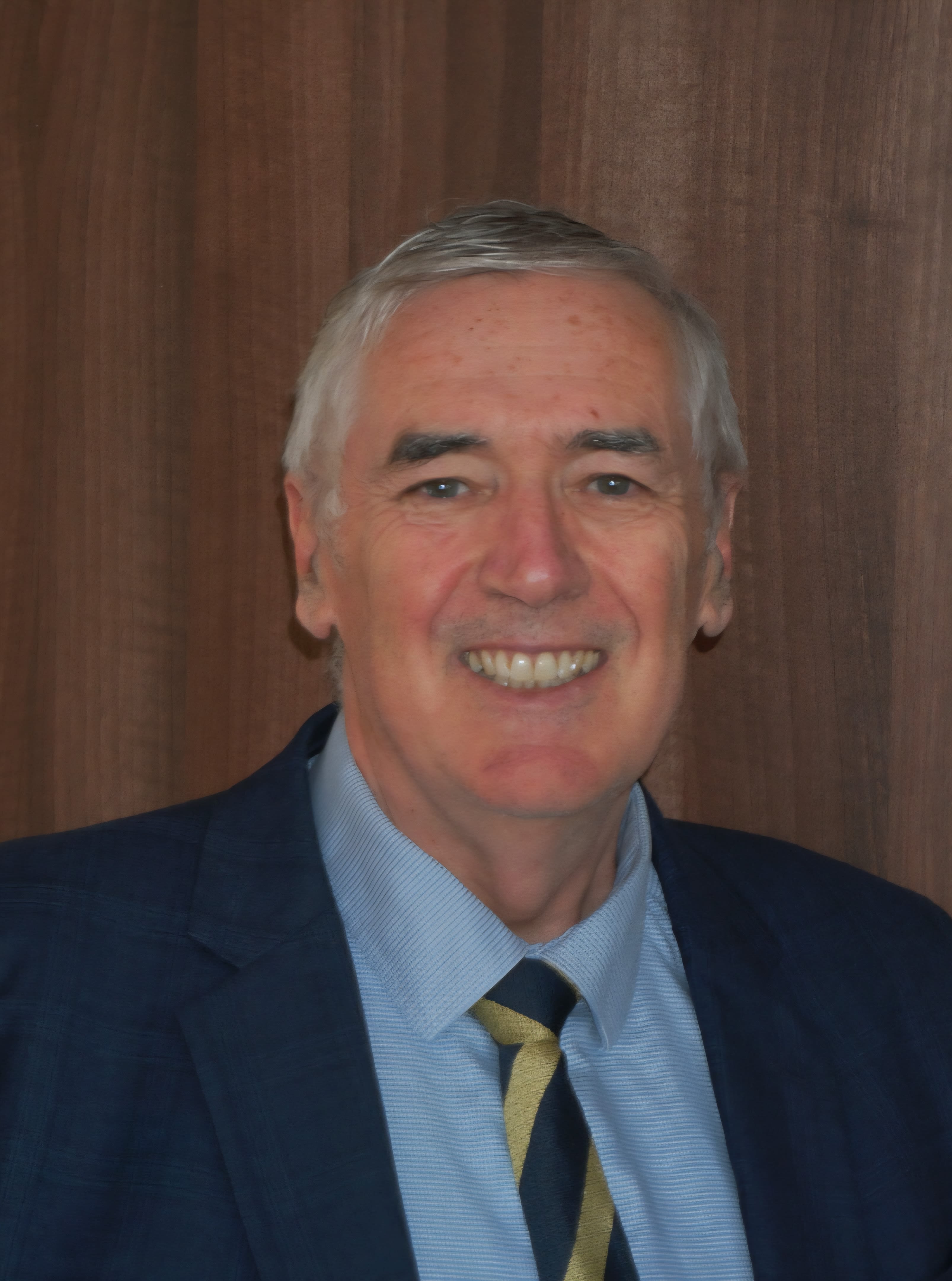
Liam McKenna leads the Capability Planning team and serves as the Head of Profession for Asset Management across the UK Ministry of Defence’s Infrastructure Organisation, within the National Armaments Director Group. He is a Fellow of the IAM, a Registered Asset Management Professional, and represents the MOD on the IAM Patrons.
Liam has more than 30 years' experience managing assets within the maritime and infrastructure sectors, including as the Asset Management Director for two of the world’s largest shipping operators. A background in engineering, operational maintenance and large international programmes, coupled with his leadership in asset management best practice, has been instrumental in strengthening asset management across defence.


Turn to the contents page for more articles on leadership and culture. You may also be interested in this article from Liam McKenna
Your AM Journey
Career pathways


Trevor Taylor and William Fuentes on finding asset management, shattering the ‘dark arts’ illusion, and discovering a global support network


What is your current role?
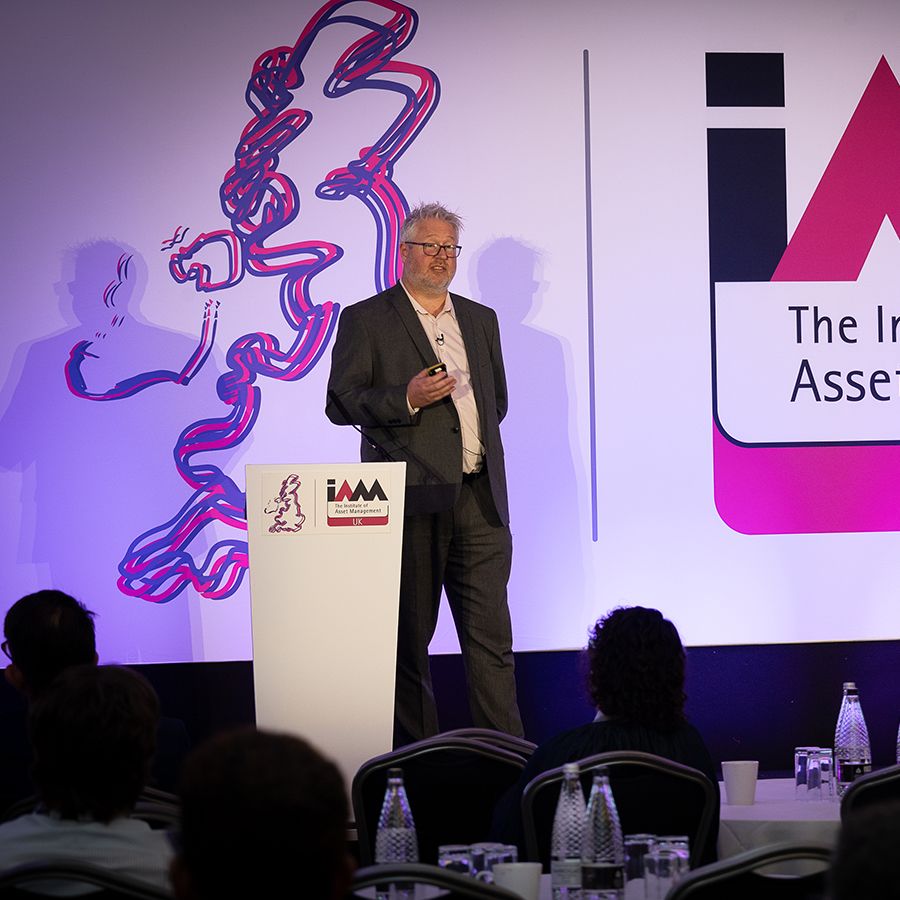
Trevor Taylor (TT): I'm the Regional Asset Data and Analysis Manager for Network Rail's Eastern Region, which covers around one‑third of the UK’s rail network. This includes 6,000 miles of track, 7,500 daily passenger services and more than one million tonnes of weekly freight. I serve as the regional technical authority for asset data, leading the development and governance of asset data policy and strategy. My role ensures our data can help answer asset management questions, as well as provide expert guidance on effective data management.
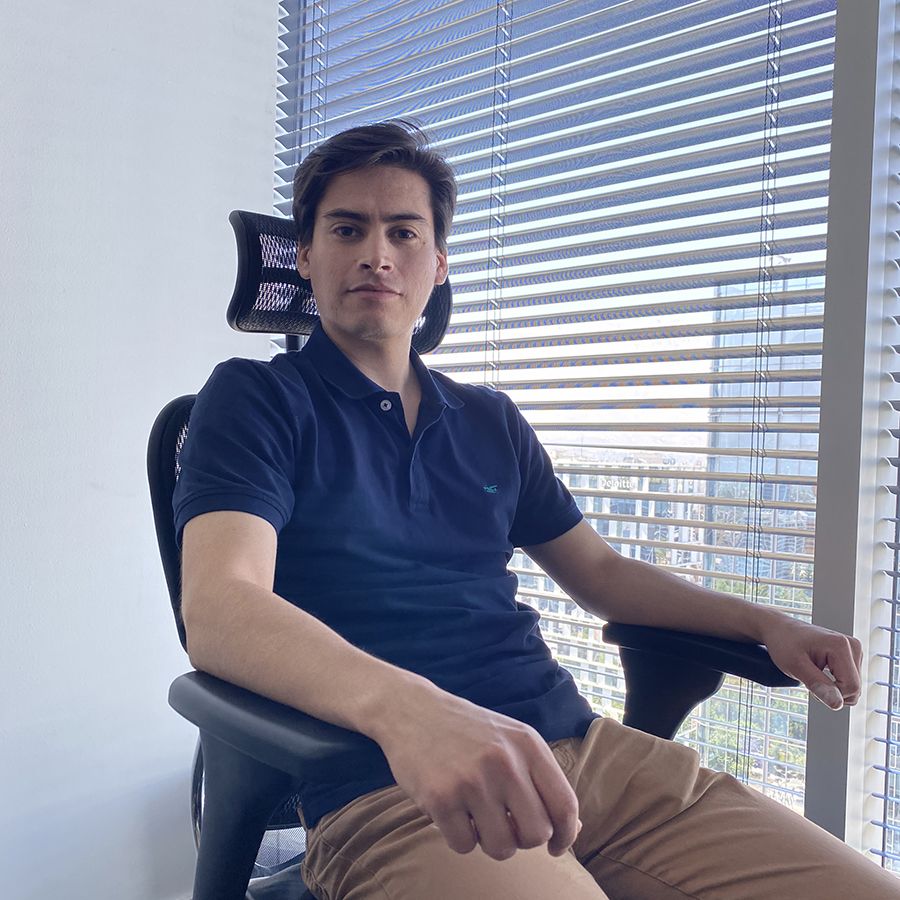
William Fuentes (WF): I am a Capital Projects Analyst at Deloitte Chile, where I support infrastructure and capital-intensive project engagements across various industries.
When did you start working in/first hear about asset management?
TT: I began my career as a maintenance planner, quickly becoming intrigued by how asset data could be structured to answer far more than its original purpose. That curiosity led me towards whole-life-cycle decision-making. I still remember my boss showing me the newly published PAS 55 and saying, 'we finally have a standard for asset management!' I couldn’t imagine how such a standard could exist – I had only encountered technical standards and wasn't familiar with management systems back then – but the framework captivated me. It provided a structure to help answer all of the questions I'd been asking.
WF: I began my asset management career in 2024, at KPMG Chile, within its Infrastructure Asset Management practice. As an entry-level civil engineer, I worked with clients across highway, port, mining and energy sectors – an experience that shaped my professional foundation and deepened my understanding of physical asset management across diverse, complex industries.
What support has helped you in your asset management career?
TT: Qualifications such as the IAM's Certificate and Diploma have helped me to get my foot in the door, but I think the skill to unpick complex interactions across organisations and understand motives has been key. To do this, I’ve needed support from leaders who were willing to give me the freedom to explore ideas, think differently and tackle institutional obstacles. Whenever I've had that support, meaningful and rewarding work has followed, which, in turn, has helped me to develop.
WF: IAM documentation has been instrumental across the projects in which I have been involved, providing structured knowledge that has been crucial to my professional development. My Corporate Finance Diploma enables me to assess the financial impact of asset management decisions, including cost evaluation and risk analysis. Additionally, my project management certification allows me to structure asset strategies across the full project life-cycle, bridging technical asset management principles with sound organisational and financial governance.
Any advice for people looking to progress in the profession?
TT: Don't give up! Asset management isn't a dark art; it can be confusing and a bit intimidating at first, but it will make sense eventually.
WF: Asset management may seem complex from the outside, but it is one of the most impactful professions you can pursue. Beyond reducing costs and risks, and improving performance, its benefits extend far beyond organisational boundaries – better managed assets can mean less environmental damage, greater worker stability and safer communities. I encourage anyone entering this field to look past the documentation and recognise that asset management is, at its core, a discipline that enables meaningful, real-world change.
Name three of the best benefits that being a member of the IAM has given to you?
TT: One, accessing the vast experience of the Institute has allowed me to learn from other people's insight. Two, I've managed to work across four continents as a result of the IAM’s endorsed assessor and endorsed trainer programmes. I'm not sure I'd have had this opportunity otherwise. Three, every IAM initiative for which I have volunteered has resulted in opportunities I would never have expected, such as presenting at conferences, being asked to share my knowledge by inputting into publications, and asking questions to AM 'legends' (I won’t embarrass them by naming them).

Name three of the best benefits that being a member of the IAM has given to you?
WF: First, the global collaboration – connecting with professionals from different countries and cultures broadens your perspective in ways that are invaluable. Second, the opportunity to volunteer and contribute to initiatives that impact the wider community, while simultaneously growing professionally. Third, the extraordinary sense of mutual support within this community; whenever you need guidance or insight, someone will always be there to help. The IAM is not just a professional body – it is a network built on shared purpose.
Turn to the contents page for more articles on leadership and culture.
 Built with Shorthand