Engaging leadership


Thought leadership
Risks and rewards


Looking back over 25 years, asset management’s progress and development has been astonishing. Some may recall endless debates about asset management and maintenance, and the elusive definition of ‘good’ practice. We now have a robust body of knowledge, established standards and structured training. Investors, directors and regulators have long sought global consistency in asset management, a goal the IAM has pursued in partnership with worldwide collaborators. This has driven a huge shift from costly local asset operations to much more efficient use of planned asset management.
But much remains to be done. Achieving further progress depends on boards and governing bodies choosing to fund sometimes expensive asset management initiatives. Local asset management leaders sometimes feel boards or CFOs overlook their concerns. It’s worth exploring this issue and considering solutions.
Do boards of directors listen to asset managers?
It may not always appear so, but boards do listen. For asset-owning organisations, ‘asset management’ is typically listed among the 10-12 competencies sought during board member recruitment. Boards and audit committees want assurance that regulatory reports and asset resilience are well managed. They also want to ensure that strategic objectives guide their actions and help prevent costly crises. That’s why they value the objective, data-driven methods of modern asset management.
However, I can understand why asset managers occasionally feel frustrated or marginalised. I looked at the backgrounds of board members of five infrastructure operators: two from water and sewage, and one each from rail, property and energy.
These companies, public and private, manage global assets and include not-for-profits. I wanted to understand how many of them had direct experience of ‘asset management planning’. This is what I found:
|
Board members with asset |
Company 1 |
Company 2 |
Company 3 |
Company 4 |
Company 5 |
|
Yes |
1 |
2 |
3 |
1 |
1 |
|
No |
9 |
10 |
11 |
7 |
10 |
|
Figure 1: Table showing the number of board members with asset management experience in each company |
|||||
“Boards and audit committees value the objective, data-driven methods of modern asset management”
Board members I judged to have ‘asset management planning’ experience were often CEOs or capital delivery directors. While many did not have a significant ‘asset planning’ career path, they all understood the value of asset management and gave the subject an appropriate voice in board discussions.
Asset management’s role
To look deeper into how the boards of these five infrastructure owners operated, I identified their main objectives or risks, and judged how many were directly linked to asset resilience or performance. The table in Figure 2 (below) shows the types of judgement involved.
While achieving most business goals for infrastructure operators depends on equipment and infrastructure working properly, Figure 2 indicates that only a few of the boards’ priorities are directly related to asset resilience or performance.


|
Asset-related objective/risk |
Business-related objective/risk |
|
◼︎Construction costs (overrun) ◼︎Customer service if linked to specific assets (eg, winter disruption) ◼︎Specific climate/environmental (eg, drought, cladding) ◼︎Resilience of assets (eg, dams, property damp/mould) ◼︎Construction benefits delivery (eg, new rail line/prevent bush fires) |
◼︎Health and safety ◼︎Customer service ◼︎General environmental/climate ◼︎Financial/treasury measures ◼︎Reputation/litigation/political ◼︎Culture/change/industrial relations ◼︎Cyber/terrorism ◼︎Regulatory contract performance |
|
Figure 2: Table showing the asset-related objectives and risks compared with business-related objectives and risks |
|
Looking at this data, it is tempting to conclude that it is easier for management consultants, accountants, human resources professionals and public affairs leaders to be appointed to boards, and perhaps that is why asset management planning is a somewhat marginalised activity.
Similarly, while most operational key performance indicators are driven by asset management events, the boards’ focus seems, at times, to miss the link between asset planning and business performance.
However, I don’t think these criticisms are fair. Despite extraordinary progress, we must be honest with ourselves: asset management planning still faces limits in its ability to deliver affordable resilience. Operational excellence, local knowledge and ownership, culture and nimble disaster recovery remain vital aspects – with their interactions often tangled, led by different executives and competing for resources. Boards' attention is therefore divided; asking them to place even more reliance on asset management planning is much like asking them to steer a car with complete reliance on a steering wheel that only partially controls direction.
Taking more risk safely
I don’t think we should be in any way disheartened by this, however. As we look to the future, asset management has an immense role in driving organisational success. Decades ago, authority rested only with engineers, because of their technical skills. Years ago, a utility CFO told me he trusted accountants more than engineers, saying accountants prefer to collect money while engineers are too eager to spend it. Harsh perhaps, and possibly becoming outdated, but if we can see where we have come from, it is easier to get clues about future direction. This is particularly important now, because I believe we are on the edge of a huge information revolution that will turbo-charge asset management capabilities. As data costs plummet and processing capabilities expand, asset planning’s reach and impact will grow further. Artificial intelligence and machine learning are accelerating this progress, unlocking value in fragmented data.


|
Company 1 |
Company 2 |
Company 3 |
Company 4 |
Company 5 |
|
|
Asset-related |
3 |
6 |
4 |
1 |
2 |
|
Business-related |
13 |
14 |
17 |
6 |
10 |
|
Figure 3: Table showing the numbers of board objectives that are either asset related or business related |
|||||
Rather than telling boards what we need, we should listen harder to what they want. Boards and executives are always asking planners, builders and operators to take more risk safely and deliver stronger business performance. Engineers and asset planners typically value certainty. But by striving and taking personal ownership for delivery of asset management improvements that deliver better business performance, we will make the business case for more investment into asset management systems more attractive.
Business leaders and management consultants, who make up most board members, are much more comfortable with ambiguity, opportunity and uncertainty. They are looking for, and will support, sensible risk takers. Audit committees and leaders will welcome the increased oversight and assurance that practical asset management enhancements will give them.
While such scrutiny may feel uncomfortable, using asset management as a tool for improvement – rather than an end in itself– will encourage our boards and executive leaders to support these efforts.
Contains extracts from the recently published book Risk, opportunity & performance: The art of taking worthwhile risk

Clive Deadman started work as an engineer in the mining and automotive sectors. He spent nine years in private equity/accountancy and then 20 years with United Utilities and Electricity North West. For the past 11 years, Clive has worked as a Professor of Water and Energy, and as a Chair and Non-executive Director of a range of regulatory and asset-owning organisations.

Turn to the contents page for more articles on leadership and culture.
Opinion
Lou Cripps
Leadership without stewardship
Leadership and culture determine whether systems protect people and assets, or quietly undermine them. Asset management reveals this with unforgiving clarity

Some of the smartest people I have met have been terrible leaders. They were great with ideas, great with relationships and great at sounding smart in a meeting. Yet they failed in the responsibility that matters most: they did not protect their people or their organisations’ assets.
Leadership divorced from stewardship creates a culture that is ‘activity without alignment to purpose’. When doing what is right bends to personalities instead of disciplined use of frameworks, systems become fragile and unpredictable.
Asset management exposes these failures early. Leadership and culture are the largest uncontrolled inputs in any asset management system. When those inputs are weak, inconsistent or self-protective, effort alone cannot compensate.
The signals of decline are predictable. Firefighting replaces planning. Popularity replaces accountability. Short-term fixes replace stewardship. Process complaints become excuses to bypass the system.
The damage compounds. Deferred renewals accelerate life-cycle cost. Bypassed processes increase risk. Burned-out employees reduce institutional memory.
Constraints are containers that create shape. Without the sides of the pot, there is no vessel. Without rules, there is no game. Without constraints, there is no system.
In asset management, constraints include rules, processes, life-cycle logic, funding realities and performance objectives. When constraints are respected, alignment holds. When ignored, chaos follows.
If you do nothing else after reading this, just document one asset-related decision. Not a major programme. Not a perfect answer. One real decision. Write down the purpose, constraints, options considered, risks accepted and rationale. State what you chose to do and what you chose not to do.
This matters because undocumented decisions teach the organisation that judgement is personal, memory is sufficient and accountability is optional. Documented decisions do the opposite. They create an audit trail. They expose misalignment. They force trade-offs into the open.
One documented decision begins the shift from personality-driven outcomes to system-driven stewardship. That single act reinforces discipline, exposes misalignment and shifts the organisation.
We cannot control who is hired to lead us. What we can control is whether our systems depend on personalities or withstand them.
We can choose rigour. We can choose documented decisions over memory. We can choose stewardship over convenience.
Resilience does not come from charisma or good intentions. It comes from repeatable decisions made inside our frameworks that make trade-offs visible and avoidance hard. Culture does not change through slogans. It changes when systems reward accountability and highlight the cost of poor decisions.
Our job as asset managers is to build processes and systems that will outlast any CEO and become ‘business as usual’. To apply discipline even when it is uncomfortable. What is in it for leaders is simple: a legacy they can stand behind, rather than a reputation defined by short-term fixes and decaying assets.
That is how culture shifts begin.
The only question left is whether our systems are strong enough to survive the next weak leader.
"Leadership and culture are the largest uncontrolled inputs in any asset management system"
"If you do nothing else after reading this, just document one asset-related decision"

Lou Cripps is an IAM Registered Asset Management Professional, Director at Regional Transportation District in Denver, Colorado, and co-author of Legacy: A decision-maker’s guide to infrastructure and Building an asset management team. He is a Board member for Talking Infrastructure.
Some of the smartest people I have met have been terrible leaders. They were great with ideas, great with relationships and great at sounding smart in a meeting. Yet they failed in the responsibility that matters most: they did not protect their people or their organisations’ assets.
Leadership divorced from stewardship creates a culture that is ‘activity without alignment to purpose’. When doing what is right bends to personalities instead of disciplined use of frameworks, systems become fragile and unpredictable.
Asset management exposes these failures early. Leadership and culture are the largest uncontrolled inputs in any asset management system. When those inputs are weak, inconsistent or self-protective, effort alone cannot compensate.
"Leadership and culture are the largest uncontrolled inputs in any asset management system"
The signals of decline are predictable. Firefighting replaces planning. Popularity replaces accountability. Short-term fixes replace stewardship. Process complaints become excuses to bypass the system.
The damage compounds. Deferred renewals accelerate life-cycle cost. Bypassed processes increase risk. Burned-out employees reduce institutional memory.
Constraints are containers that create shape. Without the sides of the pot, there is no vessel. Without rules, there is no game. Without constraints, there is no system.
In asset management, constraints include rules, processes, life-cycle logic, funding realities and performance objectives. When constraints are respected, alignment holds. When ignored, chaos follows.
If you do nothing else after reading this, just document one asset-related decision. Not a major programme. Not a perfect answer. One real decision. Write down the purpose, constraints, options considered, risks accepted and rationale. State what you chose to do and what you chose not to do.
This matters because undocumented decisions teach the organisation that judgement is personal, memory is sufficient and accountability is optional. Documented decisions do the opposite. They create an audit trail. They expose misalignment. They force trade-offs into the open.
One documented decision begins the shift from personality-driven outcomes to system-driven stewardship. That single act reinforces discipline, exposes misalignment and shifts the organisation.
We cannot control who is hired to lead us. What we can control is whether our systems depend on personalities or withstand them.
"If you do nothing else after reading this, just document one asset-related decision"
We can choose rigour. We can choose documented decisions over memory. We can choose stewardship over convenience.
Resilience does not come from charisma or good intentions. It comes from repeatable decisions made inside our frameworks that make trade-offs visible and avoidance hard. Culture does not change through slogans. It changes when systems reward accountability and highlight the cost of poor decisions.
Our job as asset managers is to build processes and systems that will outlast any CEO and become ‘business as usual’. To apply discipline even when it is uncomfortable. What is in it for leaders is simple: a legacy they can stand behind, rather than a reputation defined by short-term fixes and decaying assets.
That is how culture shifts begin.
The only question left is whether our systems are strong enough to survive the next weak leader.
Lou Cripps is an IAM Registered Asset Management Professional, Director at Regional Transportation District in Denver, Colorado, and co-author of Legacy: A decision-maker’s guide to infrastructure and Building an asset management team. He is a Board member for Talking Infrastructure.
Turn to the contents page for more articles on leadership and culture. You may also be interested in this article from Lou Cripps on the stewardship of public assets.
Knowledge base
Achieving new standards


In October 2025, United Utilities became the first UK water company to achieve certification to the revised ISO 55001:2024. Learn about the reasons why it took the bold decision to go first, the importance of leadership in mobilising the organisation, and lessons learned from the transition process
Words: Simon Cain
The UK water sector faces intense scrutiny. Expectations for resilience, long-term value and responsible investment have increased, alongside heightened political and public attention. Regulatory direction has moved decisively towards strengthening asset management maturity:
- Summer 2024: ISO 55001:2024 published
- December 2024: Ofwat (the UK water services regulator) confirms allowances for the AMP8 regulatory control period
- February 2025: United Utilities (UU) begins ISO 55001:2024 gap assessment
- June 2025: Ofwat consults on improving asset management maturity
- July 2025: Independent Water Commission report published
- October 2025: UU achieves ISO 55001:2024 certification
- November 2025: Ofwat states expectations for industry-wide adoption
As soon as ISO 55001 was updated in 2024, it was clear how closely the new standard aligned with Ofwat's drive for resilience, efficiency and long-term value. In January 2025, I proposed to UU's executive leadership team that when we re-certified later that year we should take the opportunity to transition to the new standard. To support this, I reviewed insights from the IAM and Assetivity, and consolidated the changes into clear themes (Figure 1).
|
Aspect |
ISO 55001:2014 |
ISO 55001:2024 |
|---|---|---|
|
Assessment |
Reference to three levels of asset management, asset |
Explicit requirements to demonstrate |
|
Leadership and stakeholder engagement |
Leadership involvement was present; stakeholder engagement was implicit |
Stronger emphasis on leadership roles and comms explicit expectations on stakeholder engagement |
|
Risk and opportunity management |
Basic risk management guidance provided |
Enhanced guidance on identifying and |
|
Strategic Asset |
SAMP was mentioned but not emphasised as a standalone section |
SAMP has a dedicated section, emphasising strategic alignment |
|
Decision-making frameworks |
No structured framework for decision-making |
Introduces structured, data-driven |
|
Information and |
Information management was not distinctly categorised |
Clear separation into information |
|
Sustainability and |
Limited focus on sustainability and life-cycle value |
Greater emphasis on sustainability, resilience and life-cycle value realisation |
|
Alignment with other |
Some alignment with other ISO standards, but less integrated |
Improved alignment with ISO 9001, ISO 14001, and other standards |
|
Figure 1: Summary of the differences between the 2014 and the 2024 standards by theme |
||
Understanding the gap
Our internal assurance team then worked through a detailed, manual comparison of every clause of the 2014 and 2024 versions. This proved to be one of the most valuable parts of the journey. Even subtle changes in wording represented important shifts in intent (Figure 2).
By March 2025, we identified:
- ~160 new or materially changed requirements
- 36% of clauses showing a gap or partial gap
- 169 actions required to close the gaps.
This analysis gave us a strong understanding of the compliance gap to the new standard and allowed us to prioritise activity. We categorised all actions into themes to shape the delivery plan and engage colleagues effectively (Figure 3).

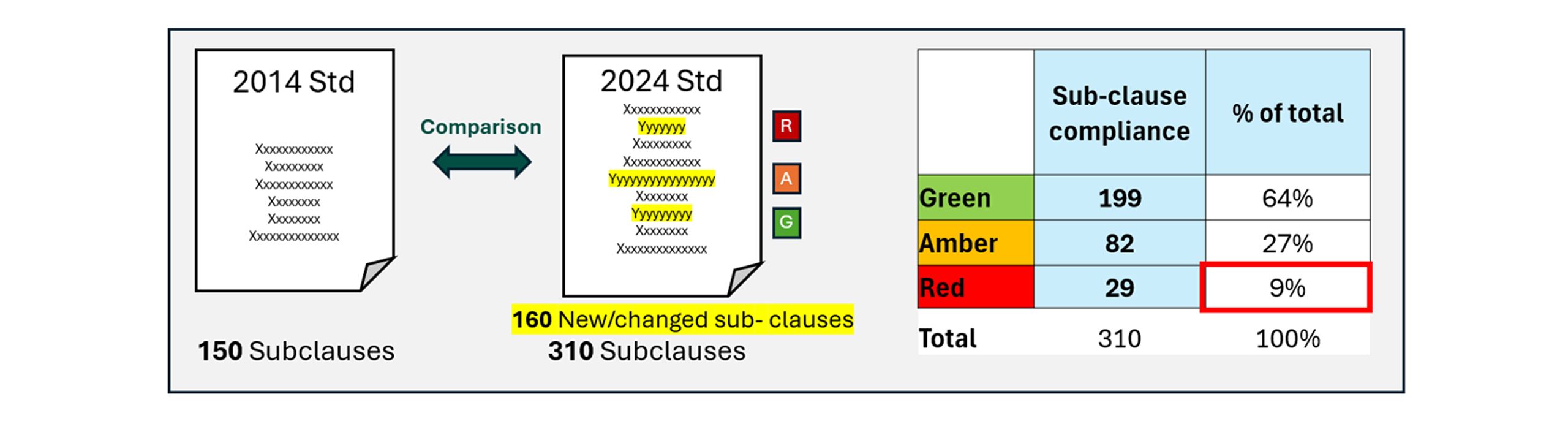
Figure 2: Summary of UU’s gap assessment (March 2025), revealing that approximately one‑third of clauses requirements required further development before attempting to certify against the 2024 standard
Figure 3: Breakdown of the 169 actions required to close the gaps into activity categories
Mobilising the organisation
UU’s leadership team recognised the opportunity for sector leadership and the reputational risk of attempting – and potentially failing – the new standard. To manage this, a ‘go/no‑go’ decision point was agreed, with the fallback of re-certifying to the 2014 standard.
From that moment, the goal was clear: make enough progress in closing the gaps to give leadership confidence to commit.
To succeed, we needed broad organisational engagement. Four activities were critical:
1. Updating the Strategic Asset Management Plan (SAMP)
The SAMP became the backbone of our transition. We expanded authorship from 15 contributors in 2022 to 32 contributors in 2025, ensuring it reflected how we actually manage assets.
The updated SAMP:
- Embedded new ISO requirements directly or signposted tools/processes/documents
- Linked each clause to evidence and accountable owners
- Connected leadership decisions and organisational changes to the standard.
Delegating ownership of content to subject-matter experts ensured they were already familiar with the requirements before their audit interviews.
2. Strengthening governance
Leadership was provided through the Asset Management Steering Group (AMSG). Director-level challenge and support was crucial for securing help from busy colleagues across the business, and we invited our auditor to observe the steering group meeting on day one of the audit. This helped sharpen senior focus and demonstrate visible leadership – a major theme in the new standard.
3. Consolidating asset management information and documentation
The 2024 standard is clearer and more explicit in its documentation expectations. This helped us provide subject-matter experts (SMEs) with precise requirements and create several new documents that captured existing practice more transparently.
4. Engaging and preparing people
More than 100 colleagues contributed to gap-closing activities. The detailed gap analysis allowed us to translate requirements into familiar UU language, relating them to our products, processes and tools. This built confidence and capability ahead of the audit.
These four activities delivered value before the audit even began. They strengthened organisational understanding of asset management and reinforced the connection between day‑to‑day roles and the strategic system.
By June, we had made significant progress in the gap-closing activity. In the same month, Ofwat published its License Condition consultation outlining consideration to making the new ISO 55001 compulsory. The AMSG took the decision to 'go' for the new standard.


“Use your IAM network – the insights and support available across the community are invaluable”

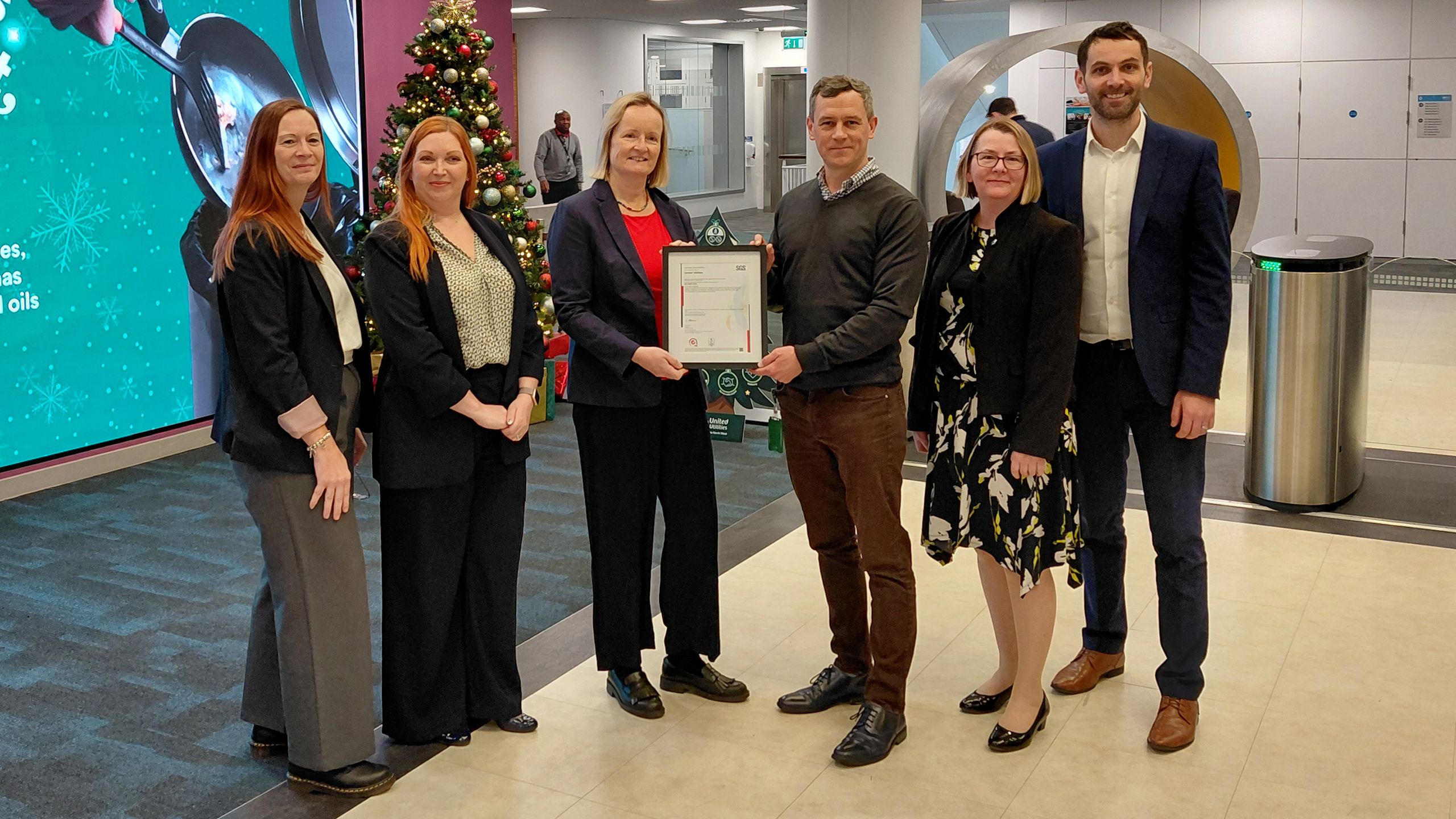
SGS representatives presenting the ISO 55001:2024 Certificate to United Utilities. From left: Claire Hughes (Head of Operations, SGS), Lianne Gray (Head of Commercial Development, SGS), Liz Moran (Business Manager, SGS), Simon Cain (Asset Lifecycle Manager, United Utilities), Carol Brudenell (ISO Manager, United Utilities), Phil White (Chief Maintenance Officer, United Utilities)
The audit experience
Experience has taught us that planning the agenda is critical. Ensuring the right colleagues were lined up with the right evidence in advance was essential. Although it’s impossible to predict every question, it is possible to help people prepare.
We focused firstly on the new clauses, recognising these as the greatest risks. To support consistency, we also conducted:
- A pre‑audit briefing covering common auditor questions
- A post‑audit debrief to share findings and lessons learned.
This reinforced the collective sense of ownership that is vital to success.
The certification audit took place over eight days at 13 sites, and involved 85 interviews across operations, engineering, bioresources, networks and head office.
Some of the auditor’s closing reflections included:
- ‘You were brave to go first’
- ‘Your capability has improved a lot since 2022’
- ‘Your people were very open and engaged’
- ‘Your leadership is impressive’
- ‘Your SAMP has matured significantly (although it's a bit too long!).’
We expected to pick up findings – after all, identifying areas for improvement is the point of an audit – and our final report included:
- 1 minor non‑conformity
- 25 observations
- 3 positives
- 82 suggestions for improvement.
The audit created real value by bringing teams together, reinforcing shared purpose and highlighting opportunities we may have missed.
A whole‑organisation achievement
Certification arrived a few weeks after the audit, following submission of our action plan and the Certification Body's (SGS) completion of internal checks.
Our COO, Matt Hemmings, said: 'The achievement is testament to how we work together at UU and reflects the embedding of asset management into our "Simpler, Smarter, Better" philosophy. It belongs to every colleague involved.'
What next?
We’re proud to be pioneers in achieving this standard in the UK water sector, but certification is not the end state. We know that there’s more we can do to improve and, by building on these foundations, we can deliver more for our customers and create a stronger, greener, healthier North West.
For organisations considering their own transition, three pieces of advice stand out.
- Take time to deeply understand the new standard – the nuances matter.
- Use the transition to integrate asset management meaningfully into how you already operate.
- Use your IAM network – the insights and support available across the community are invaluable.
Good luck on your journey.


Simon Cain is Asset Lifecycle Manager at United Utilities, which provides water and wastewater services in the northwest of England. He leads the development of organisational asset management capabilities, including asset management plans, risk frameworks, benchmarking and training. He has more than 15 years of experience in asset management at Network Rail, Yorkshire Water and United Utilities. He is the ISO 55001 lead for United Utilities and Chair of the IAM UK Chapter North West Branch.
Useful resources
IAM Webinars ISO 55000 series – What’s new and what changed in 2024 and IAM – ISO55001:2024 (Why, What and How)
Assetivity article: ISO 55001:2024 vs ISO 55001:2014 – A Comparison
Turn to the contents page for more articles on leadership and culture. You may also be interested in this article from Simon Cain
Opinion
David McKeown
What do
we want –
and why?
Anyone can spend money on assets. That makes them ‘asset managers’ (in some people’s eyes). But how can we do better?

R
ead the following statements and decide whether you think they are true.
Anyone can procure assets. Is this ‘investment’? Really? So many people mistake a car for an asset instead of a liability (yes, there are exceptions!). Until it is in use, what value is there from a big project?
Anyone can operate/maintain assets. Badly or well? Uptime has no value per se. Good stewardship requires real clarity of purpose. Typical management sees this as overheads to be minimised, but so-called efficiencies often become an unintended debt later.
Anyone can renew assets. Yes, but when is the right time? If you defer renewal by better maintenance, is that a Capex or Opex decision? Why do so many organisations silo their thinking?
Anyone can replace assets. Because they’re worn out? Too many people manage what they have, when what they should do is choose the right assets.
Assets are defined as anything that has potential or actual value. But ‘value’ needs to be assessed across the ‘Six Capitals’ framework (manufactured, natural, social and relationship, human, intellectual, financial), including services, capabilities, people, consumables, reputation, intellectual property, know-how and so on.
Organisations and individuals often do all the above activities – badly! They think short term and waste money. The wrong assets fail to achieve the organisation’s goals or annoy customers by failing. Or costs are high and performance is perfect, but customers can’t afford it.
They are undeniably ‘managing assets’. The questions are: how could we do better; what is the test? I hope you are now screaming ’value’ at me! Are you also screaming ‘value, to/for whom’?
At least these are output measures. Even worse are input measures. Listen to the news: “We’re investing £X squillion in health”; or “We’re making $X squillion efficiencies in defence” (choose education, transport, and so on, and I’ll show you a recent example). But what precise outcomes are envisaged, when, with what measures?
It is not easy to ‘do’ asset management (coordinated activity of an organisation to realise value from assets), but that’s how value is achieved. What a shame most of us focus mainly on the asset management system (ISO 55001) and detailed processes. Far from spreading our ideas, we become absorbed in procedure and asset-centric activity.
Maybe we need to think first about what we want – what outcomes would be valuable? Then we need targets for all our activities, which only make sense within the context of the organisation and its objectives.
To do asset management really well requires clarity of purpose, strategy arising from defined outcomes, plans to deliver that strategy – then measurement. We need to integrate multiple disciplines and perspectives into strategy and plans, the decision-making as well as the ‘doing’. We need to integrate reporting to measure value ‘from’ – not ‘of’ – the assets.
The Six Capitals matter. It just isn’t true that all non-financial benefits and costs can be represented as money. It’s not true that accounting and economic practices support whole-life costs/value, especially for long-lived infrastructure (for instance, some vital assets were fully depreciated long ago). It is also not true that a ‘projects mindset’ delivers best through-life value. Consider what a preference for constructability instead of maintainability means through life.
Maybe we should focus less on assets and more on the value of using them. Begin with the end in mind (outcomes). Develop good strategies to get there. Integrate all professions in decision-making and coordinate our activities. Do asset management, in fact.
If we help our colleagues think like this, we can achieve so much more. What an opportunity!
"Good stewardship requires real clarity of purpose"
"Maybe we should focus less on assets and more on the value of using them"
David McKeown is an experienced infrastructure manager and senior leader, working in commercial, public sector, military and volunteer organisations. He was a founder member and first CEO of the IAM. He believes good people, culture and leadership are critical to successful asset management, which is basically simple, but never easy.
R
ead the following statements and decide whether you think they are true.
Anyone can procure assets. Is this ‘investment’? Really? So many people mistake a car for an asset instead of a liability (yes, there are exceptions!). Until it is in use, what value is there from a big project?
Anyone can operate/maintain assets. Badly or well? Uptime has no value per se. Good stewardship requires real clarity of purpose. Typical management sees this as overheads to be minimised, but so-called efficiencies often become an unintended debt later.
Anyone can renew assets. Yes, but when is the right time? If you defer renewal by better maintenance, is that a Capex or Opex decision? Why do so many organisations silo their thinking?
Anyone can replace assets. Because they’re worn out? Too many people manage what they have, when what they should do is choose the right assets.
"Good stewardship requires real clarity of purpose"
Assets are defined as anything that has potential or actual value. But ‘value’ needs to be assessed across the ‘Six Capitals’ framework (manufactured, natural, social and relationship, human, intellectual, financial), including services, capabilities, people, consumables, reputation, intellectual property, know-how and so on.
Organisations and individuals often do all the above activities – badly! They think short term and waste money. The wrong assets fail to achieve the organisation’s goals or annoy customers by failing. Or costs are high and performance is perfect, but customers can’t afford it.
They are undeniably ‘managing assets’. The questions are: how could we do better; what is the test? I hope you are now screaming ’value’ at me! Are you also screaming ‘value, to/for whom’?
At least these are output measures. Even worse are input measures. Listen to the news: “We’re investing £X squillion in health”; or “We’re making $X squillion efficiencies in defence” (choose education, transport, and so on, and I’ll show you a recent example). But what precise outcomes are envisaged, when, with what measures?
It is not easy to ‘do’ asset management (coordinated activity of an organisation to realise value from assets), but that’s how value is achieved. What a shame most of us focus mainly on the asset management system (ISO 55001) and detailed processes. Far from spreading our ideas, we become absorbed in procedure and asset-centric activity.
Maybe we need to think first about what we want – what outcomes would be valuable? Then we need targets for all our activities, which only make sense within the context of the organisation and its objectives.
To do asset management really well requires clarity of purpose, strategy arising from defined outcomes, plans to deliver that strategy – then measurement. We need to integrate multiple disciplines and perspectives into strategy and plans, the decision-making as well as the ‘doing’. We need to integrate reporting to measure value ‘from’ – not ‘of’ – the assets.
"Maybe we should focus less on assets and more on the value of using them"
The Six Capitals matter. It just isn’t true that all non-financial benefits and costs can be represented as money. It’s not true that accounting and economic practices support whole-life costs/value, especially for long-lived infrastructure (for instance, some vital assets were fully depreciated long ago). It is also not true that a ‘projects mindset’ delivers best through-life value. Consider what a preference for constructability instead of maintainability means through life.
Maybe we should focus less on assets and more on the value of using them. Begin with the end in mind (outcomes). Develop good strategies to get there. Integrate all professions in decision-making and coordinate our activities. Do asset management, in fact.
If we help our colleagues think like this, we can achieve so much more. What an opportunity!
David McKeown is an experienced infrastructure manager and senior leader, working in commercial, public sector, military and volunteer organisations. He was a founder member and first CEO of the IAM. He believes good people, culture and leadership are critical to successful asset management, which is basically simple, but never easy.
Turn to the contents page for more articles on leadership and culture. You may also be interested in this article on unlocking value.
Thought leadership
Shape of
the future


When considering leadership and culture practices in an organisation that is focused on building a strong asset management foundation, it is common to ask how internal teams work together. That is, how do we support ourselves for success. Many asset management organisations exist in a financially constrained environment focused not only on financial performance, but also on responsiveness to its stakeholders and customers. This article invites you to consider the roles of both asset management and engineering.
For companies that operate in a regulated environment, investments in long-lived assets are viewed through a lens of providing resilient, sustainable and responsible investments. Customers demand awareness of and participation in the types of investments these companies make. Strategic asset replacement for long-lived capital investments within government, utility and municipal projects has always been a fundamental component. The timely replacement provides a foundation upon which the local, state, national and global economies rely. For the electric utility industry in particular, customers demand a reliable source of power. Increasing innovations in technology will continue to shape how the customers and utilities work together to facilitate growth and expansion.
Financial investments in infrastructure allow for sustained growth and flexibility in adopting innovation at the right time and for the right application. Leading an organisation focused on large capital investments may require a ‘holistic approach’ to understanding the cost, risk and performance of the asset life-cycle. For capital-intensive industries, such as electric utilities, engineering and asset management leadership culture will shape and enhance the future of the industry.
The IAM 10-box Asset Management Capability Model (see Figure 1) provides an illustrative approach to integrating the concepts of asset management throughout the organisation. When we think about how we work together across teams, we consider that finance and capital planning teams develop an approach to secure the proper level of funding for capital expenses. The engineering teams prioritise what projects are designed to meet the needs of the business.
Asset management teams evaluate the timing of asset replacements. Legal, risk, compliance, data, strategy – as well as other internal workforce teams – benefit by understanding how their contributions support the overall vision and mission of the company. Life-cycle delivery, or determining when to acquire, operate and maintain the assets and when the assets are replaced, provides an opportunity to bring together internal teams from across the company, integrating how their work supports the asset life-cycle. This approach may help to create internal partnerships and an understanding of both the engineering and financial requirements, as well as the timing of asset replacements. This is a continual improvement process, which aligns short-term and long-range decision-making. The 10-box Asset Management Capability Model (see Figure 1) may encourage team collaboration. Let us examine four points:
1. Defining leadership.
2. Importance of engineering leadership.
3. Embedded in the environment that depends on reliability.
4. How culture impacts the approach to asset replacement.


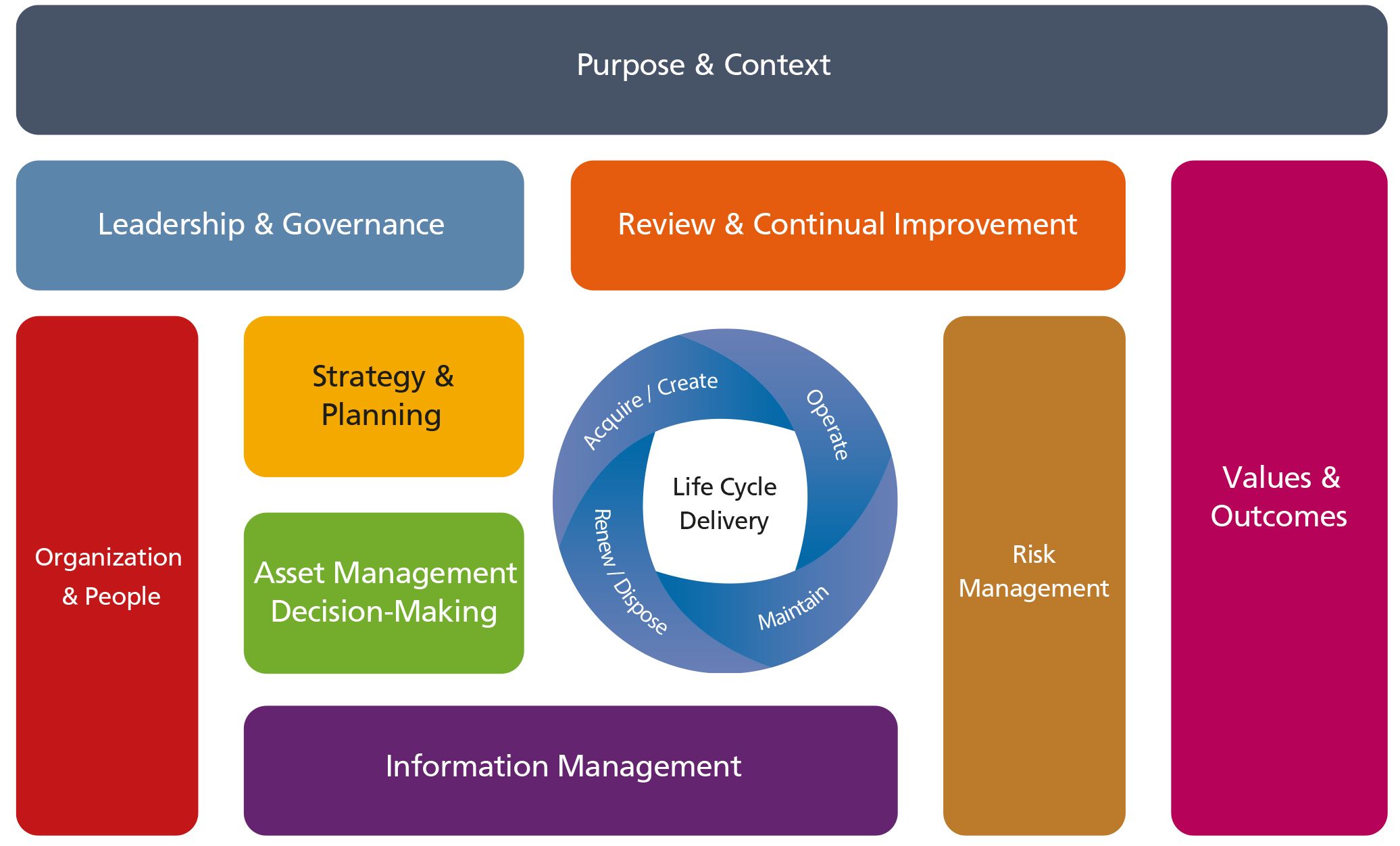
Figure 1: The IAM's 10-box Asset Management Capability Model
1. Defining leadership
Leadership within an organisation shapes the readiness of a business to respond to change. There are at least three different leadership roles – roles that are especially important within the electric utility organisations – that are important to consider. These include:
a) Functional leaders – these leaders focus on understanding the parts of the ‘whole’. They often manage the work of subject-matter experts in field operations, engineering and asset planning activities. Their focus is on efficiency, reporting and securing reliable service.
b) Staff leaders – these leaders support and translate the enterprise vision into actionable plans for functional leader adoption. These leaders understand the role of the functional leaders and the timing of change. They support and advise the functional leaders so that the operation can continue without interruption and maintain excellent performance.
c) Enterprise strategic influencers – these leaders take a long-term view of the environment and the organisation. They observe changes on the horizon and prepare staff leaders to develop strategic plans and provide support for implementation of the plans. They focus on measuring organisational readiness to change and external opportunities, building on a strong organisational culture that sees change as an opportunity for growth.
2. Importance of engineering leadership
Leading engineering organisations is based on knowledge of the business, including why the existing technologies were chosen, useful age, investments available and the timing of asset replacements. In addition, engineering leaders know how to identify skills gaps and create opportunities for learning and development. They shape the future of the organisation through careful selection of the replacement of assets and internal professional development and workforce education practices. Preparing the future workforce, as well as embedding a culture of continuous improvement, a ‘life-long learning’ approach provides stability in asset performance and employee satisfaction.
“Preparing the future workforce, as well as embedding a culture of continuous improvement, a ‘lifelong learning’ approach provides stability in asset performance and employee satisfaction”
3. Embedded in the environment that depends on reliability
A strong governance process is also needed to ensure that the plans are executed and projects are completed on time and within budget. It is important to recognise where and when success occurs, and to share lessons learned so that the feedback can support and encourage future innovation. Such an approach is illustrated in Figure 2. This approach supports the needs of stakeholders who look to their utility for reassurance that priorities are established and reliability and affordability are part of the vision of the company. This approach looks at the asset portfolio, employees and the organisation with a ‘systems engineering’ approach that supports strong asset management practices. The organisation benefits by adopting a cross-department view to long-term investments. The IAM has a wonderful image and video suggesting how to think of asset management practices (see Figure 2) and how to encourage cross-departmental understanding.
4. How does culture impact the approach to asset replacement?
Engineering leadership focuses on understanding the anticipated changes (recent technology, innovation in processes and tools), then frames a discussion around the current and future needs.
The IAM’s 10-box capability model reflects a systems engineering approach directly because it is inclusive. Engineering and asset management leadership are the foundation upon which other teams build their systems. Enhancing a culture of engineering and asset management supports the need to continue developing the knowledge and skills of our current employees, and is incredibly attractive to new talent.



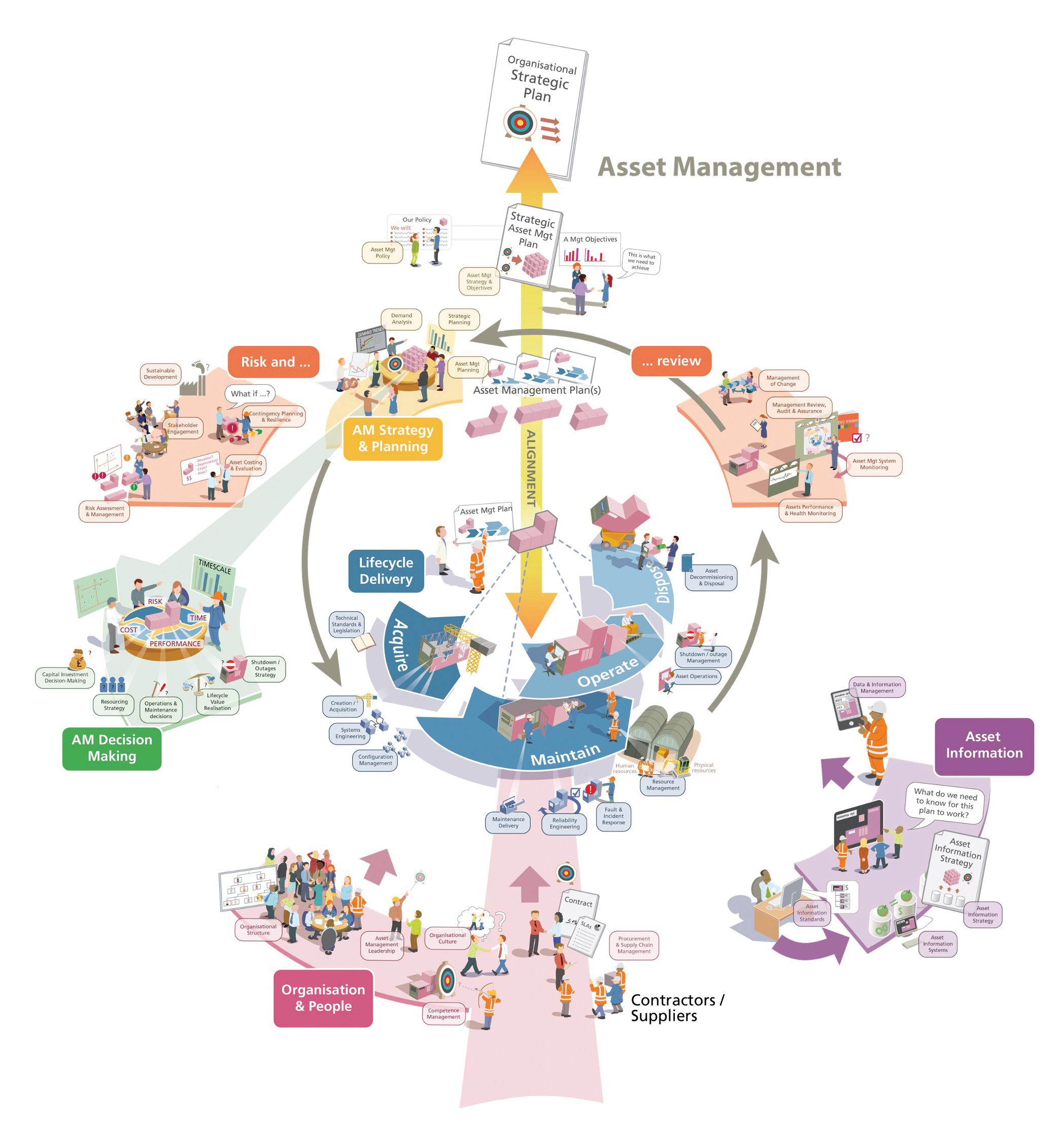
Figure 2: People Do Asset Management
Mary E Reidy is a Principal Engineer and the lead for National Grid’s New York Asset Strategy team. She has more than 30 years of experience focused on the electric and gas utility industry, and has held leadership positions across engineering and business organisations. Mary is the current Chair of the executive committee for Asset Management in Transmission and Distribution at the Center for Energy Advancement through Technological Innovation; a Member of the Working Group for IAM Continuous Professional Development; and Co-President of the IAM New England Chapter. She holds a professional engineer licence in the state of New York, a doctorate in management, an MBA, a Master's in engineering BS accounting; and a BSEE in electrical engineering and applied physics.
Turn to the contents page for more articles on leadership and culture.
 Built with Shorthand